
 Subscribe Now
Treating Ringworm in Infants
Ringworm is a type of fungal infection that is very contagious and can be common among young children and babies. Despite its name, ringworm is not caused by parasitic worms but by a fungus called tinea corporis. When skin is infected with this fungus, small circle or ring-shaped patterns develop on the baby’s skin. These patterns can also be red, itchy and may have dry or scaly surfaces. It is the ring-shaped pattern that ringworm gets its name from.
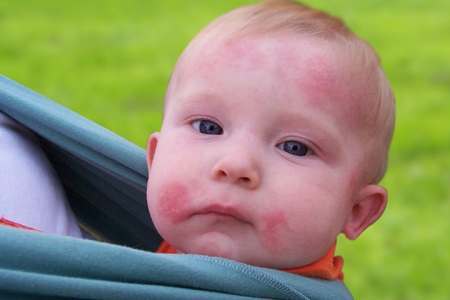 The official medical term this affliction is tinea, however there are is more than one type of tinea infection. Each affliction is named depending on where they are on the body. Tinea corporis is the name of a ringworm infection that is on the body but there are other types including tinea pedia which is more commonly referred to as athlete’s foot or tinea cruris which is referred to as jock itch. If the ringworm infection is located on the scalp it is referred to as tinea capitis. Ringworm in children is most commonly developed on the body or the scalp and is rarely caught in the form of jock itch or athlete’s foot though it is not impossible for children to be infected with any of the types of tinea.
Children and babies may transmit ringworm in several ways. One of the most common ways to get ringworm is through direct contact with someone who is infected. Tinea can also spread through personal items like linens or hair brushes that have not been properly cleaned after being handled by someone infected with ringworm. Pets, especially young pets, are also likely culprits in the spread of ringworm. Young puppies or kittens do not have the fully developed immune system needed to ward of ringworm and they are more prone to carrying it and passing it on than older animals may be.
 The symptoms of ringworm are distinct and usually present in the same way with red circular rashes on the skin. The circles may be raise or flat and they can occur anywhere on the body. Sometimes the circles may be scaly and in fewer circumstances there might be blisters or small bumps on the lesions. In between the circles, skin usually appears as normal however the size of the infected areas can vary from being quite small to a couple of inches in diameter. These lesions are often very itchy and children may find them irritating. If the infection happens in the scalp, there might be some hair loss in the affected area.
Treating ringworm is usually done with an anti-fungal medication that may be purchased either from a pharmacy or by prescription from a medical professional.
One of the most common ingredients in this medications is called clotrimazole. This active ingredients an anti-fungal and is usually directed to be applied to infected areas twice a day. While babies might require two weeks of treatment at a minimum, often ringworm infections can take up to a month to remove entirely. It is important to consult a paediatrician when deciding what medication to use for a child’s rash, especially if the ringworm infection has not gotten better after two continuous weeks of using a medicine.
It is possible to avoid spreading ringworm between children and adults through hand washing. Washing your hands after dealing with an infected person can prevent the rampant spread of ringworm through a community. Children should be prevented from scratching their infected areas as this will in flame them as well as cause them to spread. Children’s clothing and linens should all be washed and dried carefully or else discarded in order to prevent the return or spread of ringworm. Ringworm can be contagious before symptoms occur and children are often clear of being contagious only 48 hours after treatment has begun.


 This type of ringworm fungus thrives in areas that are dark and moist and so the groin area is an ideal place for tinea cruris to grow. The many sweat glands that are located here help the fungus to grow and if the area is not properly ventilated to allow for air flow, the fungus can get much worse.
 The way these infections manifest themselves depends on what part of the body they are found on and where they were picked up. Fungal infections can be passed through soil, pets and other people. People who have minor injuries to their skin like breakages or scratches are more likely to suffer from skin infections. Skin infections can be uncomfortable especially for children. However, they can be easily treated either with an anti-fungal medication or by treatment from a doctor.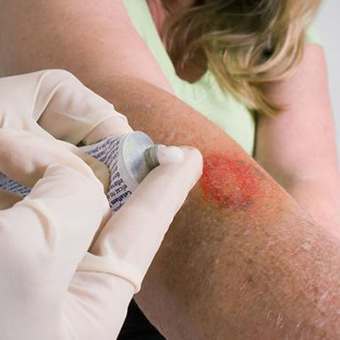

 If your immune system is compromised, or you are rundown, you are more susceptible to getting a ringworm infection. This is where a healthy, balanced diet can really make a difference. By adding more ingredients like carrots, spinach, hot peppers and kale to your diet you will help your body produce
  Natural medicine practitioners also believe that fungal infections (including ringworm) thrive on certain foods. These are foods that are high in sugar (baked goods, sweets, and even fruit), pasta and white rice (refined carbohydrates), breads and dried fruits. They propose that you remove these items from your diet, and limit your fruits to two a day. Consider doing this for a period of three months to see if this has a difference to the frequency of your ringworm infections.